This Blog is about sharing good practice and my own Teaching and Learning reflections. If you or your school would like personalised CPD, get in touch, via LinkedIn or The Contact Form in this Blog. If you enjoy this content and find it useful, please show your appreciation and buy me a coffee!
Buy me a coffe if you enjoy this content.
MFLCraft Pages
- Home
- My Pedagogic Journey
- NEW Teaching & Learning Resources at KS4 based on the NEW 2024 GCSE
- NEW Teaching & Learning Resources at KS3 based on the NEW 2024 GCSE
- NEW Schemes of Work/Learning
- Teaching and Learning Resources
- Tailored CPD for your school/trust
- Giving Students Wings: A series of 6 Webinars
- My Youtube Channel
Saturday, 16 January 2021
Teaching in times of Covid: Breakout Rooms
Wednesday, 30 December 2020
Online Teaching: Tips to save time!
This is a short post to give advice, after lot of people asked for this in private messages, about how to manage time following the approach I suggest in a previous blog (hybrid approach between synchronous and asynchronous teaching via the use of Onenote and Loom/Screen Casting lessons).
My Golden Rules to be time efficient!
1. Use a platform to share your resources, mine is Onenote, but it could be Google Classroom, Canvas, Sway, your School Website or even Padlet and stick to it! Padlet is a great alternative as it allows you to embed content nicely!
2. If using Onenote (I thoroughly recommend it), create a template of your lesson/lessons (a Onenote page) and copy and paste it for subsequent ones. In my case I always have a picture of my virtual classroom and a description of what we will be covering that week.
3. Plan activities for a week's worth of lessons, it saves time! Distribute the work at the beginning of the week.
4. Combine the work on Onenote, or any other platform, with Teams so that you can give instructions at the beginning of the lessons and do a whole class fast Starter/ Plenary activity.
5. Reuse resources you already have! Your word worksheet can work fantastically well with Onenote, for example. If you insert any Word Document as a Printout on Onenote, and make the image background, students can just write on top of it: with a digital pen or typing! Also you can just use PPT and record a voice over or just use your PPT with different hyperlinks to your activities, which you can share with your students directly. In that way your PPT be becomes your platform (Virtual Classroom) Start small!!! If going for the PPT route, check slidesmania as it offers many great FREE PPT templates which will make your content stand out!
6. Use Snipping Tool! (IT IS PART OF WINDOWS 10) With this app, you can screenshot any section of your digital textbook, worksheet, PDF past paper and save it as an image which you can then paste into Onenote or any other tool, such as PPT, word, Canva etc...
7. Do not reinvent the wheel!:SHARE THE ABOVE RESOURCES WITH YOUR DEPARTMENT. Teams or a Departmental Onenote with resources for each Year group is great for this. Also, make sure all teachers in your department do have access to each other's Onenotes so that they can copy and paste ideas and resources from each other.
8. Use as many platforms as possible that would help with your marking: Google/MS Forms, Quizizz, Quizlet, Deck Toys and LearningApps are fantastic for this! So they are a great alternative for H/W tasks. Also, why not giving students the answers and they mark it themselves in another lesson? Carousel Learning is also fantastic for that.
Remember, you are creating lessons that you will be able to reuse in consecutive years in a blended learning environment! IT IS A DEPARTMENTAL INVESTEMENT! YOU WILL SAVE A FORTUNE ON PHOTOCOPYING WHEN YOU ARE BACK TO FACE TO FACE TEACHING!
Saturday, 26 December 2020
Let's teach for the BIG MATCH: Let's keep ERASMUS!
I am a passionate MFL teacher and I love teaching my native language, Spanish, but most, importantly, I am an educator. I influence lives and MFL is a wonderful vehicle to instil tolerance, cultural awareness and break barriers among my students. MFL helps to educate global, tolerant citizens.
I see my job as a sport coach, say football: my lessons are the training sessions leading to the big football match. What is the big match? Real life experiences that allow students to put what they learn in lessons into practice. My job is to create these experiences! Why? Because we do not tend to remember our training/ coaching sessions, we remember the big real event: the football MATCH.
I believe that my students' big matches are real life situations when they will be required to put their linguistic skills to the test and learn from the experience! How do I create these experiences in the educational context? How to create experiences that are 100% memorable? Via ERASMUS Plus supported by eTWINNING.
I have been involved in several eTwinning projects over the last 20 years and every single one of them has made a difference in my students AND my teaching.
In 2018, my school and two of our partners in Spain and La Réunion decided to apply for an Erasmus project. It was a one-year project, based on the heritage of our three countries and the teaching of MFL (French, English and Spanish). THE PROJECT WAS OUR SCHOOLS' BIG MATCH AT THE TIME. We did not only learn MFL in our language lessons, but we embedded our project, United in Diversity, in the delivery of such lessons. As a consequence the learning curve, motivation and impact in our students, teachers and parents were phenomenal. WE CREATED MEMORIES, FORGED FRIENDSHIPS, OPENED HORIZONS AND BROKE MISCONCEPTIONS AND BARRIERS!
See this video footage to see it by yourselves
Or the parents' response to our project
Thursday, 17 December 2020
Gamification in the MFL classroom: Deck.Toys
I believe in gamification, especially in MFL as the subject relies in constant drilling and practice of structures and vocabulary until these are embedded in our linguistic corpus. It is not easy, especially in the UK with limited curriculum time. Languages can be perceived as challenging and, worst of all, boring!
Structured and careful planned game activities can be key to engage students, practice the language from different angles and help students to transfer information into their long term memories!
Gamification can occur in many ways and shapes! Any element of competition, even in zero preparation activities involving oral input can be a game changer!
I play games all the time! From the modelling stage, to controlled practice to spontaneous production! However, in this post I would like to talk about Deck Toys.
Deck toys
This lovely tool was introduced to me by Jimena Licitra a few weeks ago! The concept is that teachers create a learning path or deck. The deck is full of different challenges or online activities that students must complete while they advance through their path, normally simulating moving around some idyllic landscape or boardgame!
But this is not all, the app is very powerful as it allows you to create two types of activities:
Study set games, based on some vocabulary/structures input (you can transfer your Quizlet courses for this) or
Slide Activities which allows you to upload any word, PPT, PDF or worksheet/presentation and make it interactive by adding different functions to it for students to interact with: polls, text input from students, drawing input, photo, oral input or multiple choice questions.
The app also allows you to add some cool elements such as a treasure keys collection function, which allows students to collect different hidden keys along their learning path, which will open certain locks at the end of the end of the learning path; locks to enter different activities, timers, web links etc...
You can also embed your own activities from sites such as LearningApps, WordWall, Flippity or Wheel of Names to include listening, filling gaps etc.. as part of your learning tasks challenges! This feature is super important as it allows me to recycle other activities in a different setting, saving me time!
Once created, you need to make sure you create a class and assign your deck to this class. The app generates a unique class url that you share with your students. When students click on it, they join the activity signing in with their Google/Microsoft accounts, or just as guests.
The app also allows you to interact in real time with your students if working remotely!
You have access from your class, to the answers that your students submitted as part of their deck, which you can review and check for understanding.
You can do three decks for free before going pro, paying around £8 per month. This would be great for a department to generate, end of unit practice!
How do I use it?
Creating a meaningful Deck!!! Students start by practising the language we are working on via the Study Set Games (flashcards, matching, memory game, multiple choice, jigsaw etc..), whose content I just copied and pasted from my quizlet courses!!! to move quickly to activities including Reading, Translation and Listening using LearningApps, Wordwall or Flippity which allows students to practice the studied language within context in a controlled way!
I like the feature of collecting keys! You can put these keys at the end of any activity as a reward! Once collected, students can enter them into specific treasure boxes, giving a motivation to your activity, a little bit like a Escape Room! Students get points too as they advance through the deck!
If you add Locks to your activities, then you have a Escape Room, as you cannot enter the following activity until a code is entered (I use Verbs in different tenses).
The final activity of my deck would be a freely produced oral or written activity, using all the structures and verbs practised via the reading, listening and translation activities of the deck. This does not need to be part of the learning path, but the subsequent activity and the purpose of the deck!
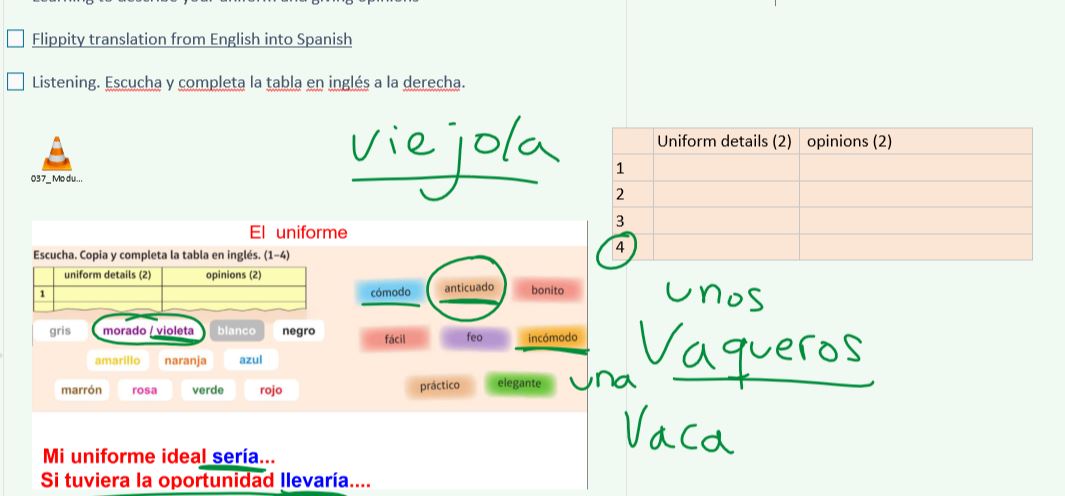
Look at this example for the topic of School in Y10:
Link to ALL my DeckToys activities
Tutorial on how to use DeckToys
Final Veredict!
I like it. I like it a lot! but it can take some time to set up if you go for a complex Deck from scratch! However, if shared among the department, it is fine! Three Decks is not a lot! so if you like it, you will need to go pro! It takes some time to get used to the way it works but it is not difficult at all, just some time consuming for the first time, but the same issue I find with Genially!
You can use Decks from other educators and modify them or just use them!
Overall, this is a great app that can really enhance the learning experience of the students but you need to plan carefully all the activities that you will use in your deck and to maximise its use, reuse those old worksheets or those great activities in other apps!!!
Link to a postblog written by me for DeckToys
Saturday, 12 December 2020
Embedded retrieval practice: the next level
A few weeks ago I read an article by Marc Enser on some research on retrieval practice. In the article Marc explained how two departments in their school (History and Geography) wanted to see the impact of retrieval practice in their students’ results. They used quizzes in their lessons for this. Both departments got an improvement in their test results but Geography’s were much higher. When they analysed the data and tried to explain this discrepancy, they discovered that History used to do a quiz in each lesson from previous knowledge but not related to the content of the actual lesson. Geography, on the other hand, did also a quiz but this was embedded in what students were learning in the lesson, hence, helping students to consolidate and embed learning in this long-term memory more successfully than the History department. This is powerful and it relates to my own practice.
Retrieval practice must be embedded with new content constantly so language becomes automatized and students can transfer structures freely from different contexts!
All activities done in lessons with new material should include structures from old topics applied to these new contexts while also making reference to the content from past topics. Planned activities and homework tasks should give students opportunities to practise past content as a matter of fact: When asking students to practice sentences on school topic, why not including sentences from holidays and, most importantly, adapting those structures from holidays into the new topic of school? When planning activities for Y11 students on the topic of festivals, why not including also content from work, free time and holidays? why not applying structures seen in the topic of free time "juego al fútbol desde hace 3 años" in this new topic "trabajo de canguro desde hace 3 meses"?
Digital tools for embedded retrieval practice
In this post I wrote, extensively, about different apps that I use for retrieval practice but I would like to add a few which I have used since while still mentioning the old ones!
Spiral.ac
This is the new kid on the block in my teaching! Introduced to me by Laura Causer during the Show and Tell Webinar of the Language Show, this tool has revolutionised my retrieval practice strategy and saved me time!!!!
Spiral is basically, like Wooclap or Mentimeter, an interactive response tool. What’s the difference with the two previous apps? You need zero preparation if you use the QuickFire light option!
Basically, you open an account, create a class (you don’t need names), select the QuickFire light option from the home menu, select your class and share a special URL and code with your students (these will also be the same for that class every time you launch the QuickFire, so my students have bookmarked it). Similar to Kahoot, Mentimeter etc....
Pupils log in with that special code (not additional login required) and you will start seeing their names appearing on your screen. When you are ready to ask questions to consolidate and retrieval previous knowledge, you just press the green go button!
Students then start writing their answers to your question, which will appear on the screen, only when you click on “reveal answers”. This option is great as students cannot copy each other and you can wait to reveal answers once everyone has submitted their input. To increase pace, I encourage early birds, either to check their answers or to extend them so they do not sit down doing nothing while partners submit answers, great for differentiation too!
At this point you may select “show names” too or “hide the names”: I find this little action powerful as sometimes you may want to give confidence to students who tend to make mistakes and you may decide not to show their names until a later stage.
However, when you decide to do so, the students’ names will appear with their answers on the screen! Big plus from Mentimeter or Wooclap and students can also modify/ improve their answer if you prompt them to do so. Great tool for feedback too.
Spiral is basically an interactive mini whiteboard and it is ideal for hybrid situations when you have students online and students in the classroom! Also no need to sanitise mini whiteboards after single use! In action it looks like the pictures below:
LearningApps
In my previous post I explained in lots of detail all the activities that can be achieved with this tool. The golden rule is to use these activities blended in the learning experience and incorporating structures and vocabulary from previous studied topics! Below there’s a how to video guiding you how to use the tool.
Flippity
Another great free tool for Retrieval Practice! The randomiser and Random Name picker are great tools for retrieval practice! Instructions are straightforward and you will need a Google account.
Extended uses of how to use Flippity can be found in this Post.
Quizizz
This tool allows you to create personalised interactive quizzes, incorporating sound too so great to revise oral questions while also checking listening comprehension!
Carousel Learning
This is another of the new tools I have started to use in the last month. Designed by Adam Boxer, creator of Retrieval Roulettes, which Julia Morris talked about during the Show and Tell Webinar in the Language Show, Carousel Learning is also a free tool which allows you to upload a spreadsheet with as many items (Qs) as you want to include, and topics. As my input, I use short sentences that students need to translate into Spanish.
In your spreadsheet you must include your question (English sentence for me), the answer (Spanish translation) and the topic it refers to. There is a template in the site to get the setting right! Once this spreadsheet is uploaded, Carousel Learning allows you to create specific quizzes on particular topics, which you can rotate and assign to different classes. There are also many quizzes questions from the learning community for you to use too!
Why do I love Carousel learning? Because students do not get immediate feedback but they are presented with the right answers at the end of their quiz. Students then must decide if they were correct or not. I think this feature is extremely powerful for independent learning and making students take ownership for their own mistakes and improvement!!! What did I get right? What did I get wrong? Why? And look for help! Although it needs training!
Jane Basnett has created this súper video on how to set up a quiz on Carousel learning. It is extremely informative and well explained so a must watch!
Genially
I love this tool!! There are many talented Genially people in the UK such as Marie Allirot or Julia Morris who actually make their own genially activities from scratch!
However, I am lazy, so I use the templates provided in the gamification section! You have many interactive free games such as Snakes and Ladders or Escape Rooms, which you only need to modify to fit your retrieval practice input! I love genially because through games students reinforce those key structures! Genially also embeds smoothly into Onenote, which I use for my lessons, although you can just share your genially game with your classes the way you want to!
You can also embed your LearningApps to the genially game questions! How cool is this?
How to use Genially video (using the app templates)
Wheel of names
One of my favourite apps! For an extensive explanation on how to use Wheel of names in the classroom and in a blended learning situation have a look at this post.
To find out how Wheel of Names works, have a look at the video below:
How to use Wheel of Names video
Textivate
Let’s not forget the basics! This is not free but it is brilliant for retrieval practice! I love every feature of it! It is very affordable. It is an improved online version of Taskmagic: same creator Martin Lapworth.
Example of Textivate activity based on Tourism and Transport (embedding principle).
Other tools you can explore!
BLOOKET
WORDWALL
GIMKIT
DECK TOYS (thanks to Jimena Licitra for this)
So, retrieval practice is important, very important. So important that it should be present in every lesson you do by embedding content and structures from all topics all the time. Using these tools allows me to do so in a motivating and engaging way! However, do not get me wrong, retrieval practice can be done without technology.
Embedded Retrieval Practice must take place at all stages of learning, ALL THE TIME and it must be planned thoroughly via meaningful activities, especially in the Practice Stage of learning!
From 9 to 1: Teaching the mixed ability class at GCSE
After a relaxing summer, away from social media, I am back just for the release of the GCSE exam results. I am generally very pleased with o...